
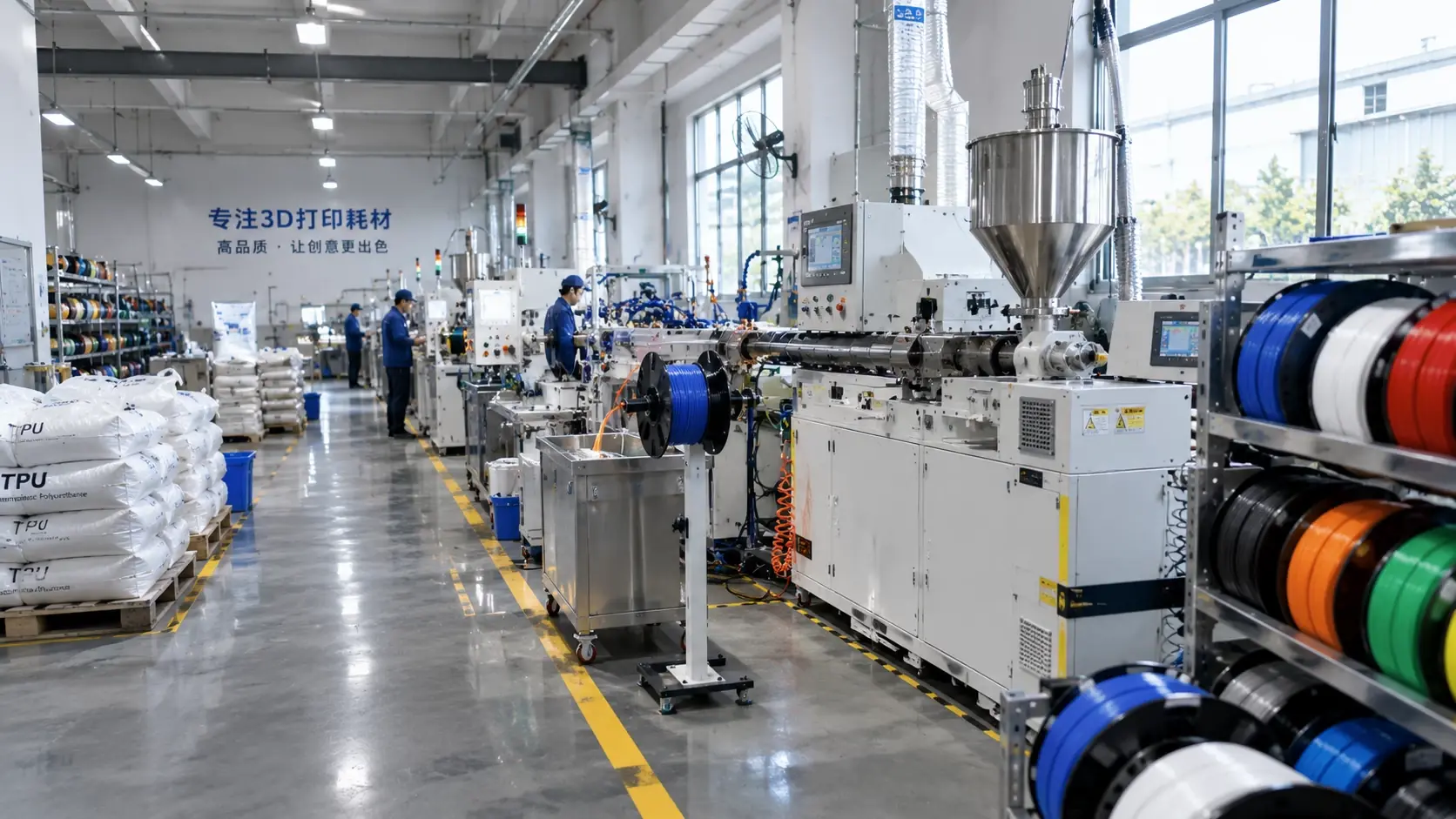
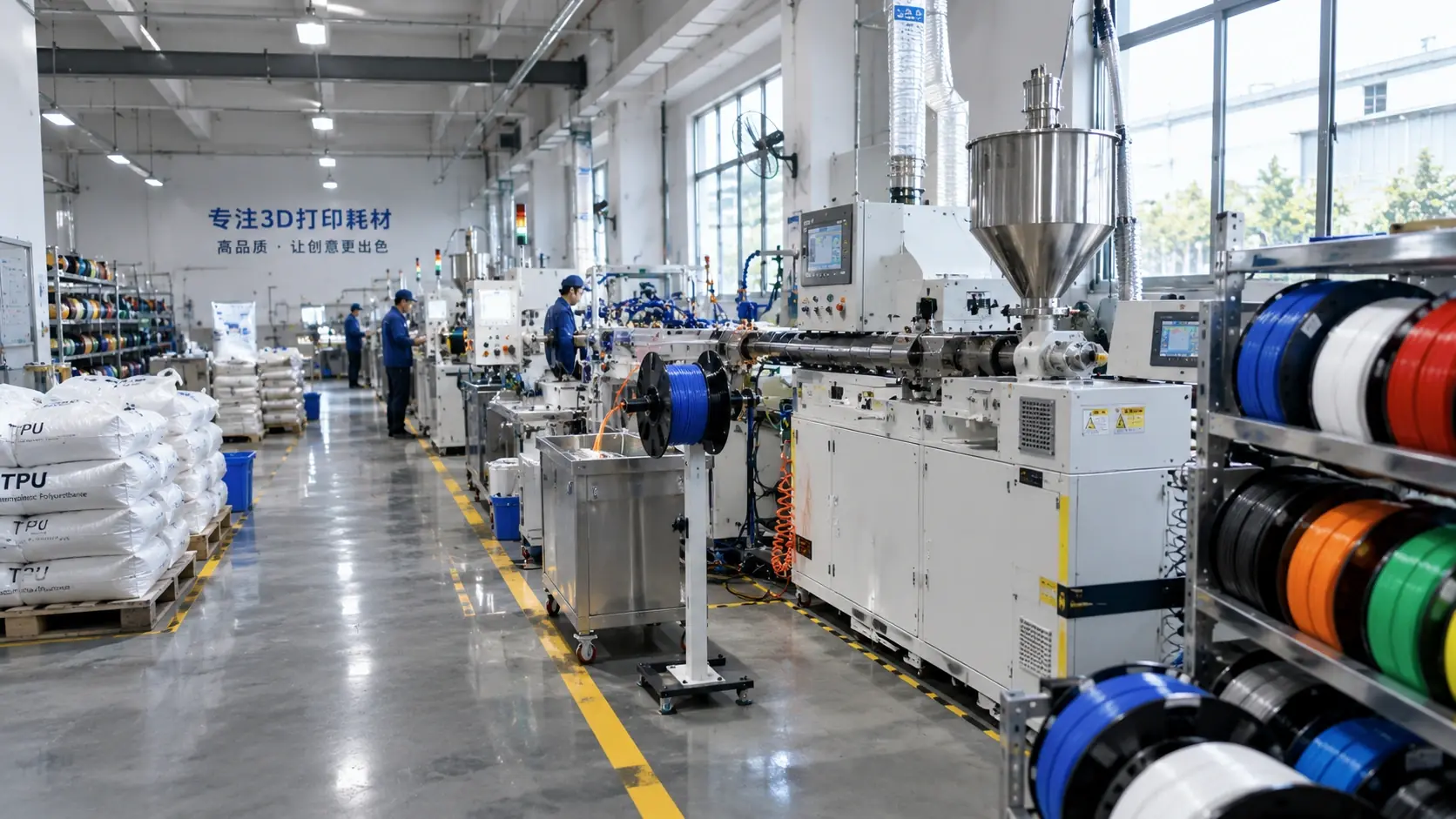
Bottom line: TPU 95A combines flexibility with shape retention, making it suitable for guards, covers, clips, grips, seals and light wear parts. It prints more easily than 85A but still needs a suitable feed path, short retraction and moderate speed. It is a functional material, not a substitute for very soft damping grades.
Suitable parts
| Part | Why it fits |
|---|---|
| Guards and corner protectors | Impact absorption |
| Covers and housings | Shock resistance |
| Clips and latches | Reversible deformation |
| Grips and handles | Friction and comfort |
| Seals and gaskets | Compression and sealing |
| Wear pads | Abrasion resistance |
Design and printing
- 1.5–3 mm wall thickness is a practical starting point.
- 20–50% infill balances softness and rebound.
- Direct drive gives more stable feeding.
- Keep retraction short and speed moderate.
- Dry the filament and keep it dry while printing.
Costly mistakes
- Using PLA profiles.
- Setting retraction too high and causing jams.
- Making walls too thin for the required rebound.
- Ignoring moisture.
- Treating 95A as a soft damping grade.
Buyer / engineer checklist
- Does the part need flex and shape retention?
- Are walls and infill correct?
- Does the feed path support TPU?
- Is the filament dry?
- Has the part been functionally tested?
Describe the part and its loads and we can confirm whether 95A is appropriate.TPU material advice