
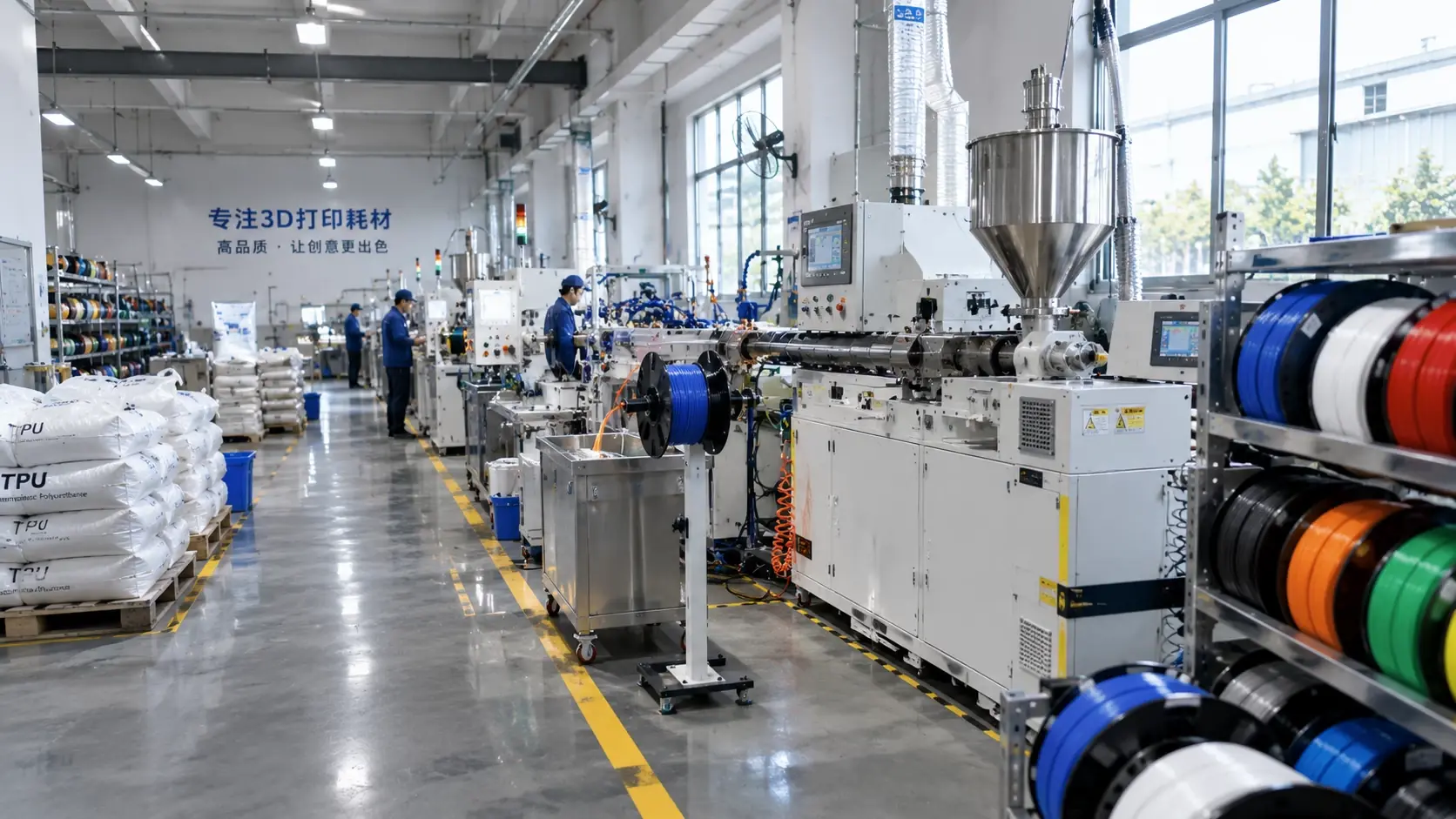
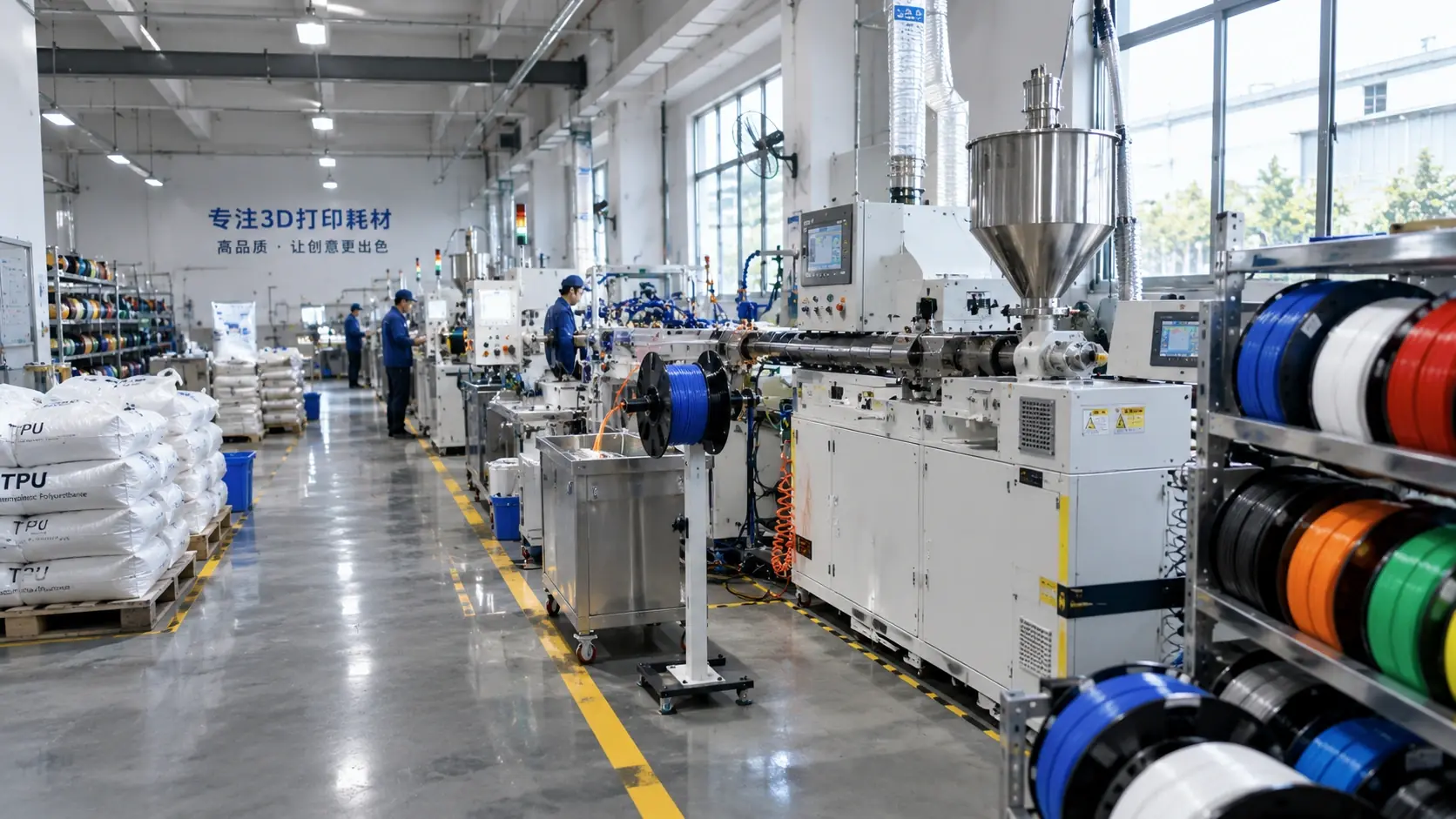
Color consistency is a batch-control problem, not only a pigment problem. Resin lot, masterbatch, extrusion temperature, screw residence time, cooling and measurement method all shift the final shade.
Define the color target properly
- Use a physical master sample, not a screen
- Specify illuminant and observer
- Record gloss and texture
- Allow a realistic Delta E tolerance
Control the pigment and resin lots
Keep resin and masterbatch lot records. Verify pigment dispersion and let-down ratio before production. A new masterbatch lot can look correct in pellets but shift after extrusion.
Stabilize the extrusion window
- Melt temperature and residence time
- Screw speed and back pressure
- Cooling rate
- Line speed and spool tension
Measure the same way every time
Use the same instrument, aperture, background and sample thickness. Measure at several points across the first, middle and last sections of the run. Store a retained sample for every batch.
| Variable | Effect on shade | Control | Record |
|---|---|---|---|
| Resin lot | Base color shift | Incoming check | Lot number |
| Masterbatch | Strength shift | Let-down ratio | Batch and dose |
| Temperature | Yellowing / darkness | Melt window | Setpoint and actual |
| Residence time | Degradation | Screw speed | Startup and end |
| Cooling | Surface gloss | Cooling profile | Line speed |
| Measurement | False Delta E | Same method | Instrument log |
Common engineering mistakes
- Approving color from a screen.
- Changing resin and masterbatch together.
- Measuring only one point.
- Ignoring gloss and texture.
- Keeping no retained sample.
Checklist
- Is the master sample physical?
- Are resin and pigment lots recorded?
- Is the extrusion window stable?
- Is measurement standardized?
- Is a retained sample stored?
Send your color target and annual volume through the request form for a batch-control quotation.