
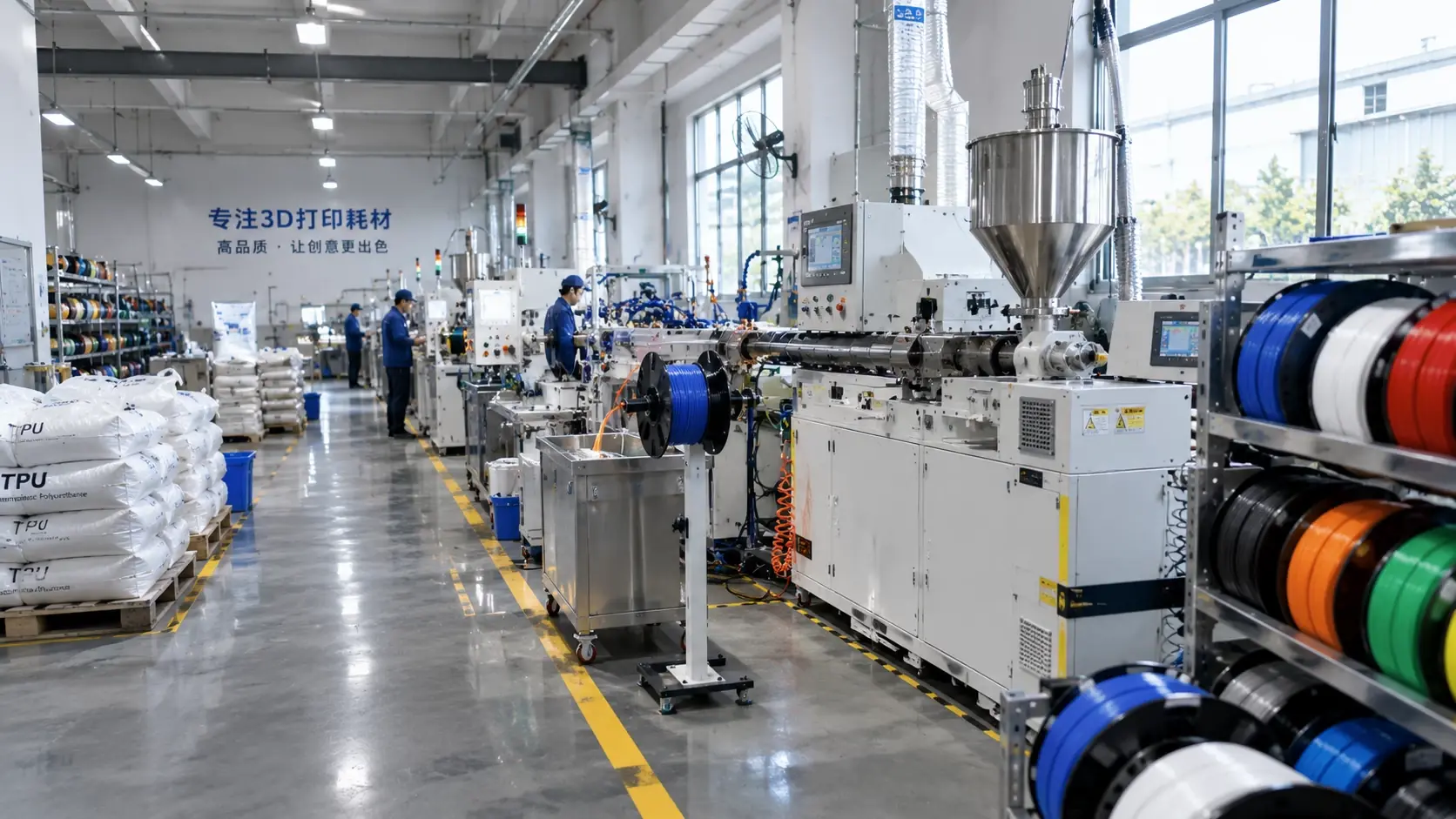
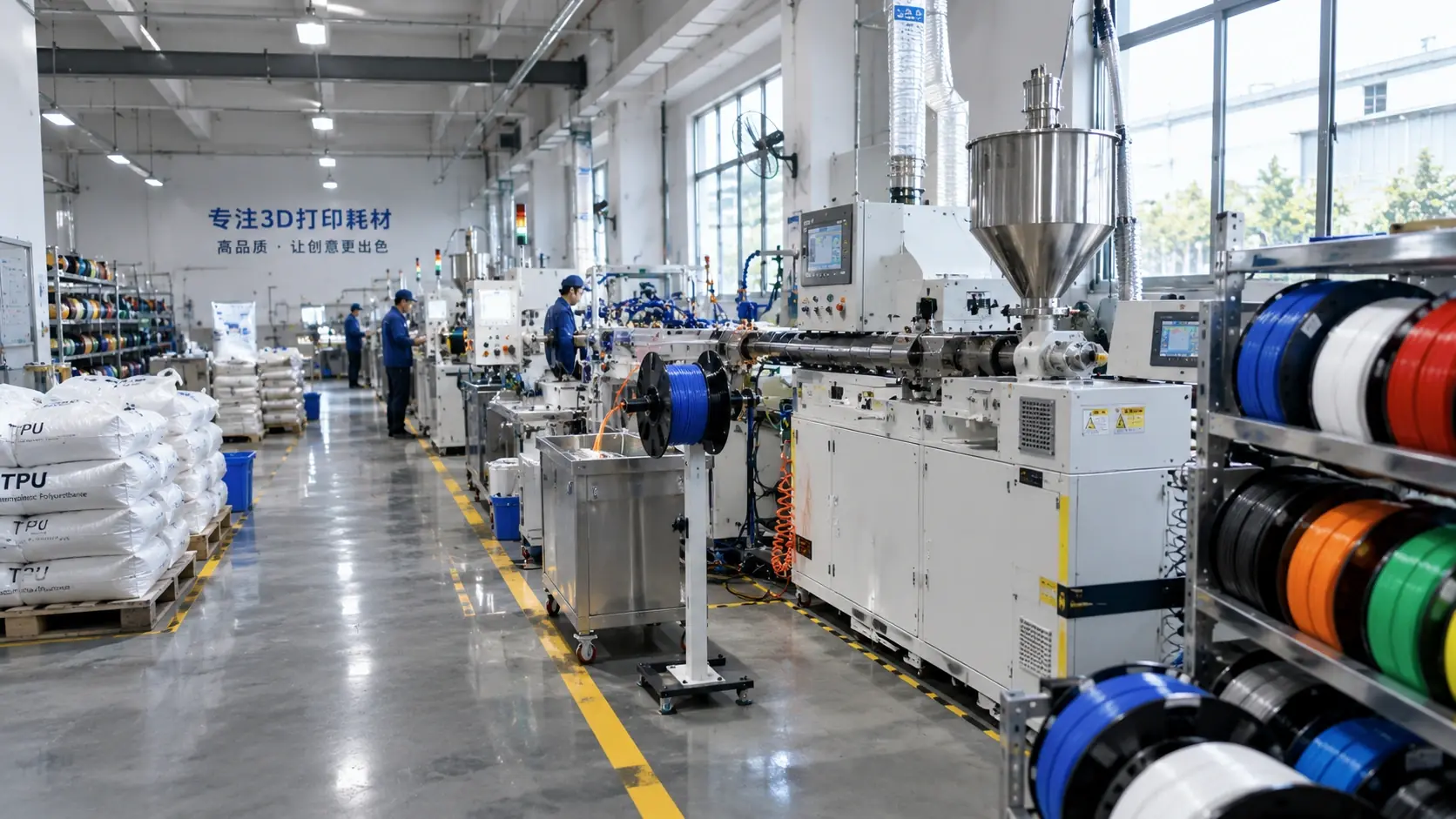
TPU selection starts with hardness, rebound, compression set, abrasion and temperature. A single Shore value is not enough because part thickness, infill and geometry change how the final part feels.
Define the application
- Grip or seal
- Impact absorption
- Sliding wear
- Temperature
- Chemical contact
Compare TPU grades
Low Shore grades are soft and compliant, medium grades balance grip and support, and high Shore grades resist abrasion and compression. Additives can improve flame resistance, UV resistance or oil resistance.
Match the printer
- Direct drive or short path
- Low retraction
- Moderate speed
- Dry box
Validate the real part
Test compression, rebound, fatigue and fit on the production geometry. Thin sections feel harder than thick ones, so a coupon can be misleading.
| Application | Priority | TPU grade | Check |
|---|---|---|---|
| Grip | Softness | Low to medium Shore | Abrasion |
| Cushion | Rebound | Medium Shore | Thickness |
| Seal | Compression set | Medium Shore | Compression |
| Wear pad | Abrasion | High Shore | Friction |
| Outdoor | UV and temperature | Special grade | Ageing |
Common engineering mistakes
- Choosing by hardness alone.
- Testing a thin coupon.
- Ignoring compression set.
- Using high retraction.
- Printing wet TPU.
Checklist
- Is the application defined?
- Does the grade match it?
- Is the printer suitable?
- Is the TPU dry?
- Was the real part tested?
Ask for a TPU selection guide through the quote form.