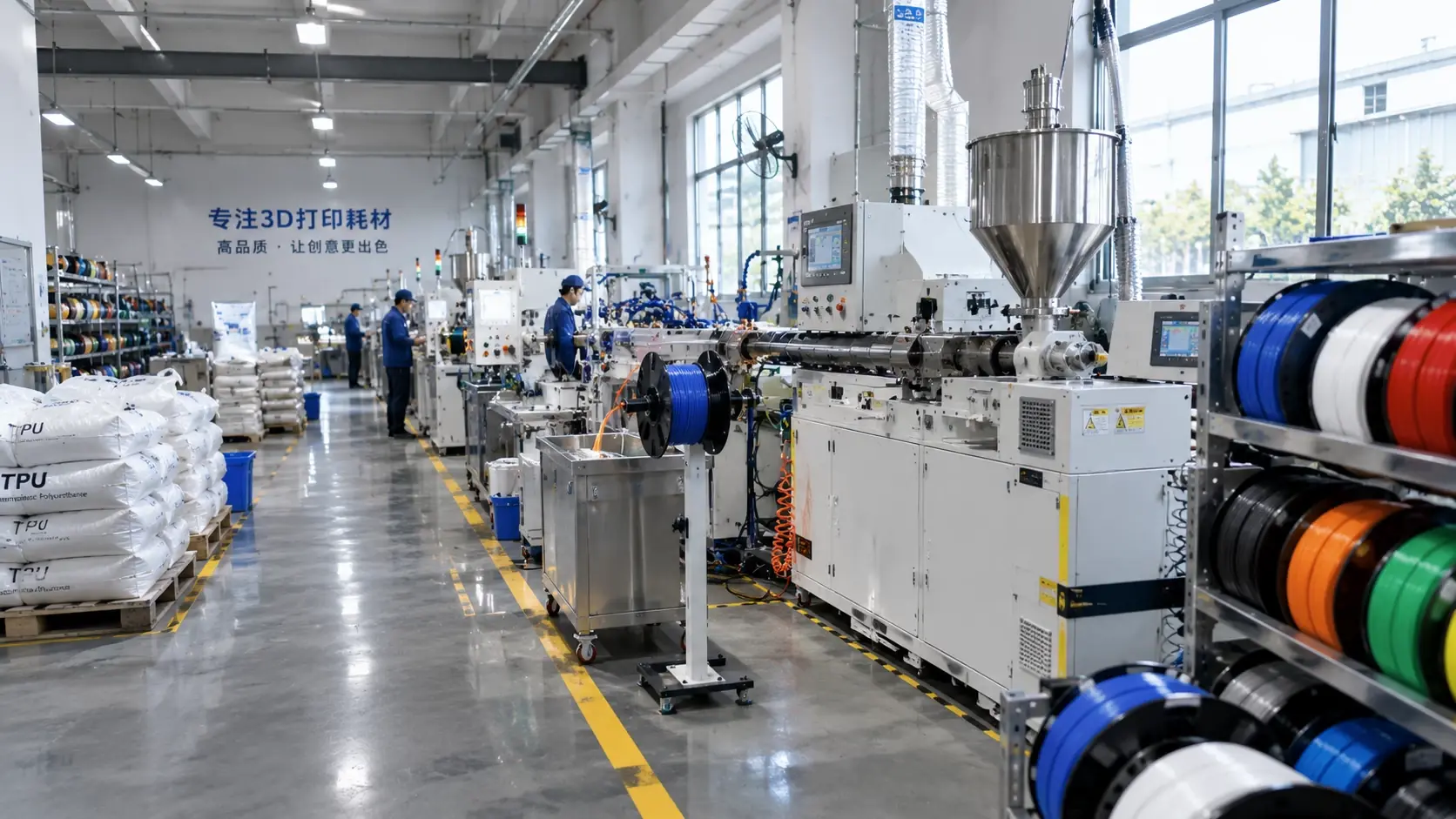
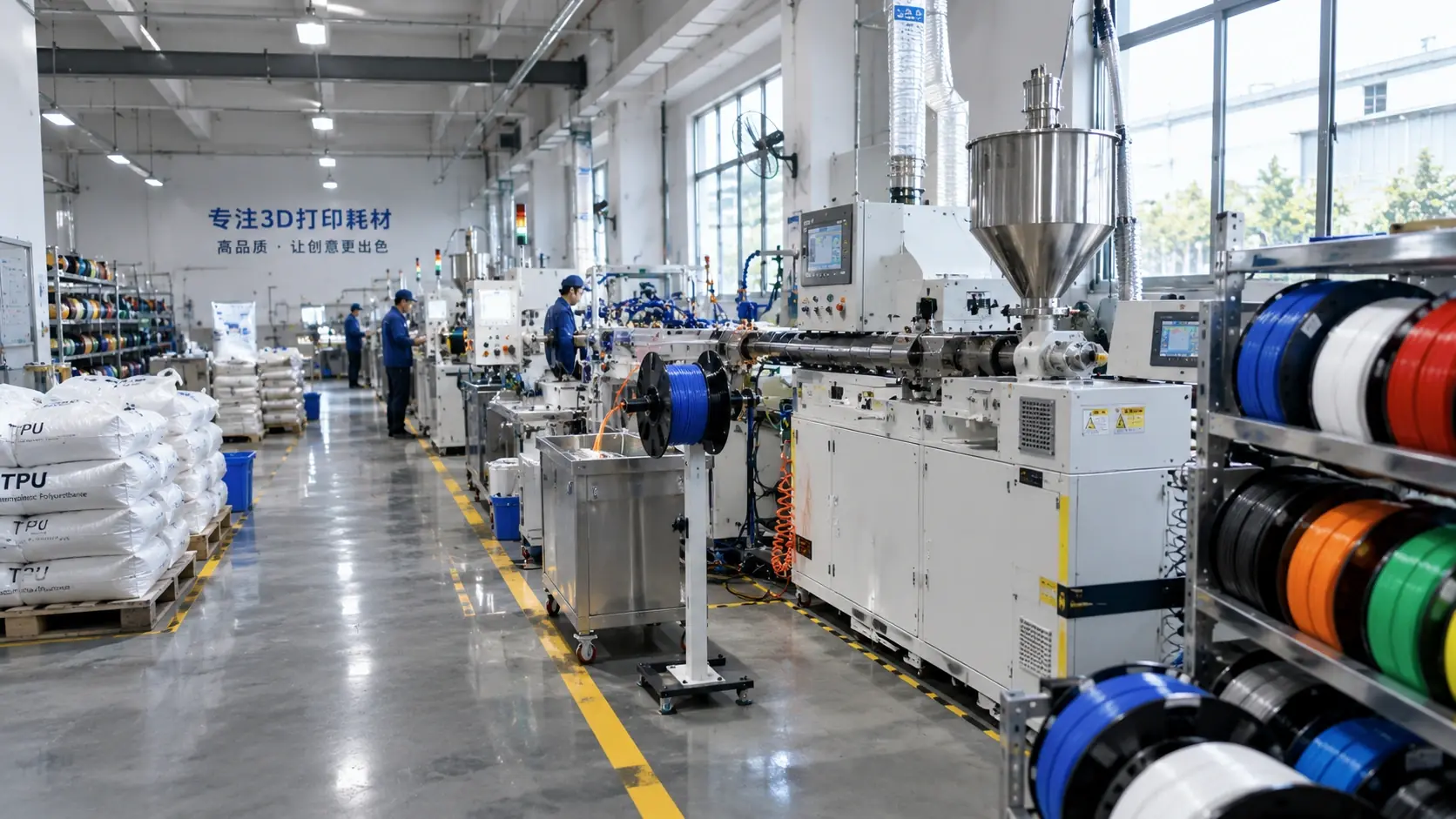
Buyers should ask filament manufacturers about raw material, batch consistency, testing, change control, capacity and quality handling.
News & Insights
Application notes, material updates, and technical insights from our engineering team.
OEM means manufacturing to a customer specification; ODM includes design and development. IP, tooling and change rights differ significantly.
A distributor information pack should contain catalog, TDS, SDS, compliance documents, images, packaging specs and commercial terms.
Batch tracking links raw material, process settings, inspection and finished product so filament quality stays consistent and traceable.
Sample to bulk order runs through requirement definition, sampling, validation, pilot production and mass production, each with defined acceptance criteria.
Export packaging for filament must protect against moisture and handling damage and carry compliant labels, batch codes and documents.
A new filament product moves through requirements, formulation, sampling, application validation, pilot production and launch, with change control throughout.
Standardising diameter, colour and net weight keeps labels, catalogs, inspection and shipments consistent across markets.
Bulk filament purchasing works through specification, quoting, sampling, validation, pilot and volume delivery with written acceptance criteria.
International supply depends on repeatable documentation, quality and packaging. Align these before negotiating volume.
The supplier information pack should let the buyer verify product and risk.
Break the project into colour, material, branding and packaging gates. Clear approvals reduce rework at the production stage.