
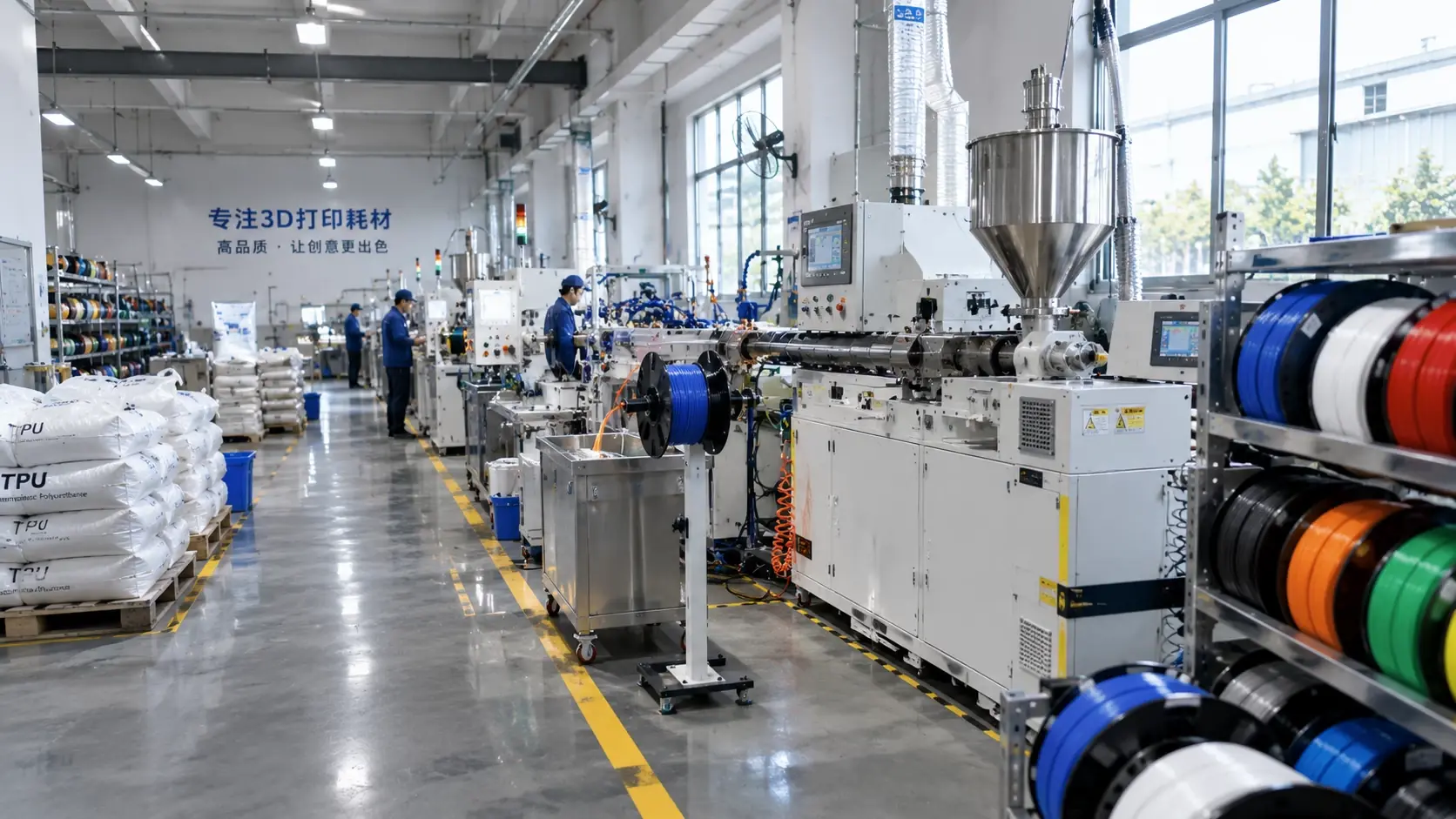
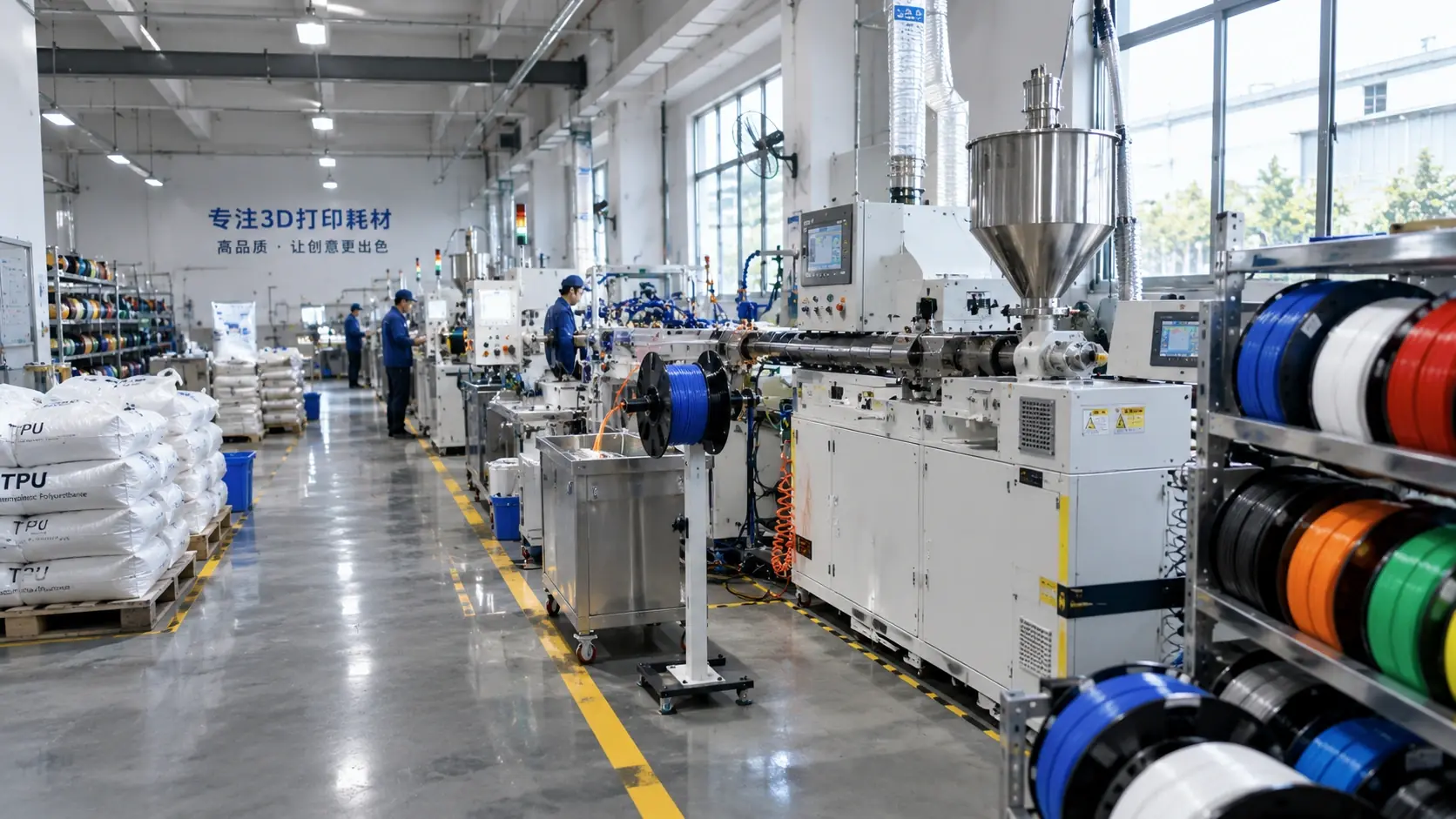
TPU absorbs moisture and can become sticky or difficult to feed after opening. Storage must prevent moisture uptake and keep the spool shape stable; a simple open shelf is not enough in a humid workshop.
After opening the spool
- Weigh the spool
- Dry if needed
- Cool before sealing
- Add fresh desiccant
Choose a storage container
Use an airtight box or high-barrier bag. A dry box with a humidity indicator is ideal for frequent use. Avoid tight winding or heavy stacking that can deform soft TPU.
Control the environment
- Cool, dark location
- Stable temperature
- Low humidity
- Short exposure time
Check before printing
Inspect the surface, weigh the spool and print a small reference part. If bubbles or rough extrusion appear, dry again before production.
| Risk | Effect | Control | Record |
|---|---|---|---|
| Humidity | Bubbles, weak layers | Sealed box with desiccant | Weight |
| Heat | Softening and deformation | Cool storage | Temperature |
| UV | Colour and ageing | Opaque container | Visual check |
| Pressure | Flat spots | Loose winding | Storage method |
| Dust | Nozzle wear | Clean container | Inspection |
Common engineering mistakes
- Leaving TPU open.
- Sealing a warm spool.
- Using exhausted desiccant.
- Stacking heavy spools.
- Skipping the reference print.
Checklist
- Was the spool dry before storage?
- Is the container airtight?
- Is the desiccant active?
- Is the storage cool and dark?
- Was a test print done?
Ask for TPU storage and drying advice through the quote form.