
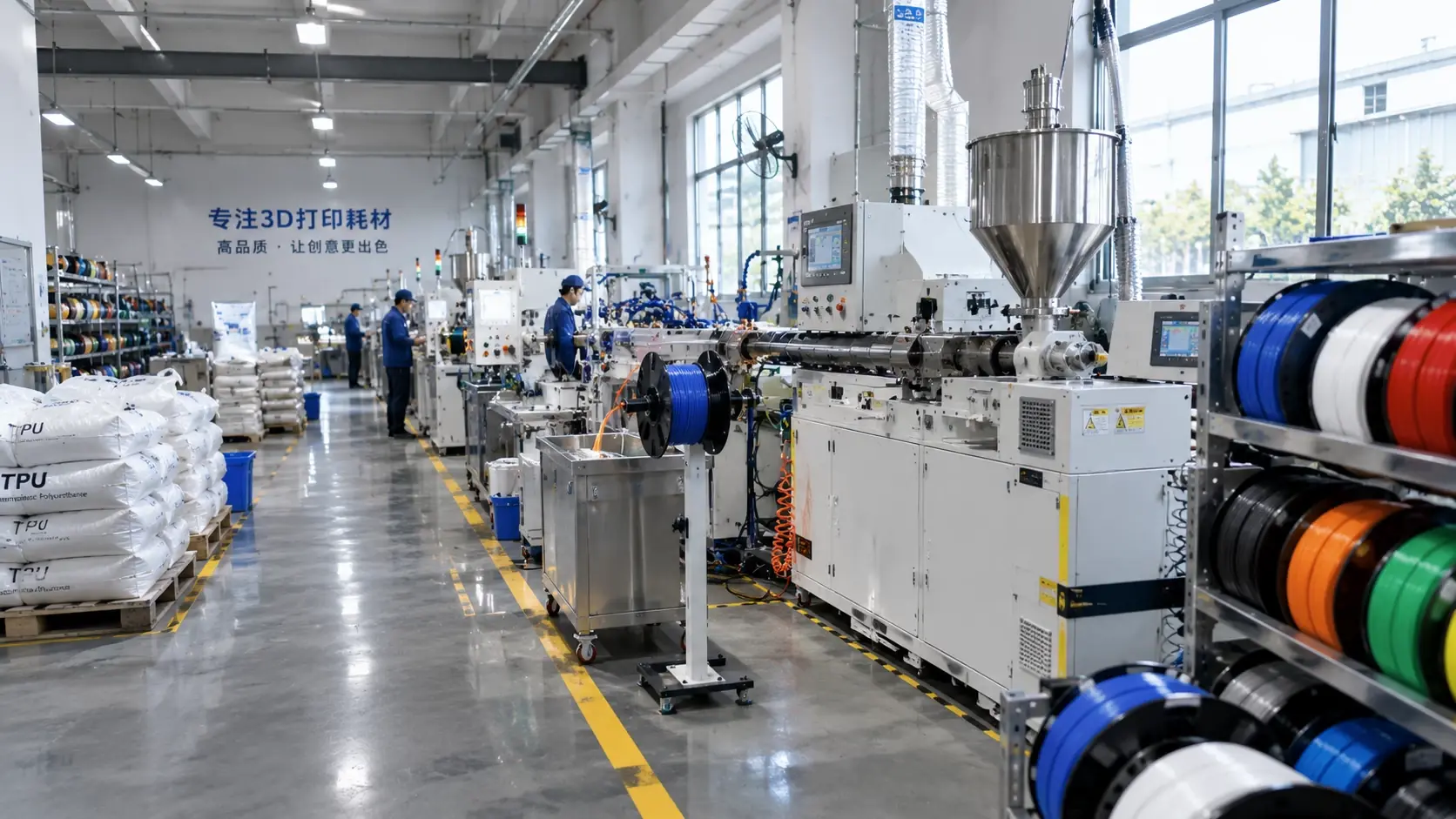
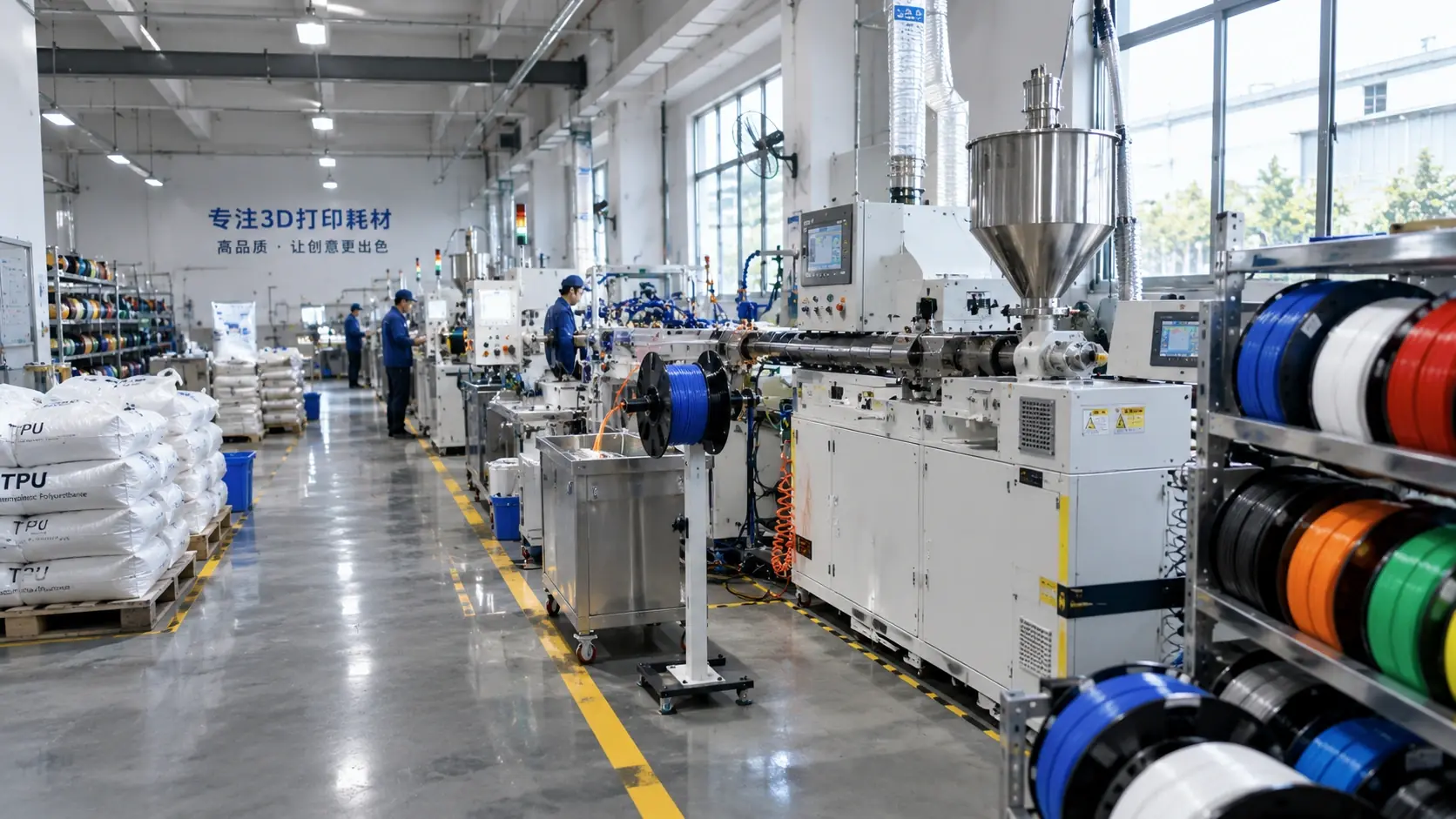
Long print jobs require consistent diameter, reliable spooling, stable extrusion and protection from moisture. A filament that works for a small sample may still fail after many hours.
Check the spool
- Diameter variation over the roll.
- Spool winding and tension.
- Weight and remaining length.
- Dry storage.
Stabilise the printer
Inspect nozzle wear, feeder tension and heat stability. Use profiles that tolerate small pressure changes and avoid extreme speeds.
Plan recovery
- Filament runout sensor.
- Pause and resume test.
- Power recovery.
- Spare spool of same batch.
| Risk | Check | Mitigation |
|---|---|---|
| Diameter | Multiple measurements | Qualified spool |
| Winding | Free rotation | Correct tension |
| Moisture | Drying record | Dry box |
| Runout | Sensor test | Spare batch |
Common engineering mistakes
- Testing only a short print.
- Ignoring winding.
- Using mixed batches.
- No runout plan.
- Extreme speed for long jobs.
Buyer checklist
- Is diameter stable?
- Does the spool rotate freely?
- Is filament dry?
- Is runout detection tested?
- Is a spare spool ready?
Discuss long-run supply through our quote form.