
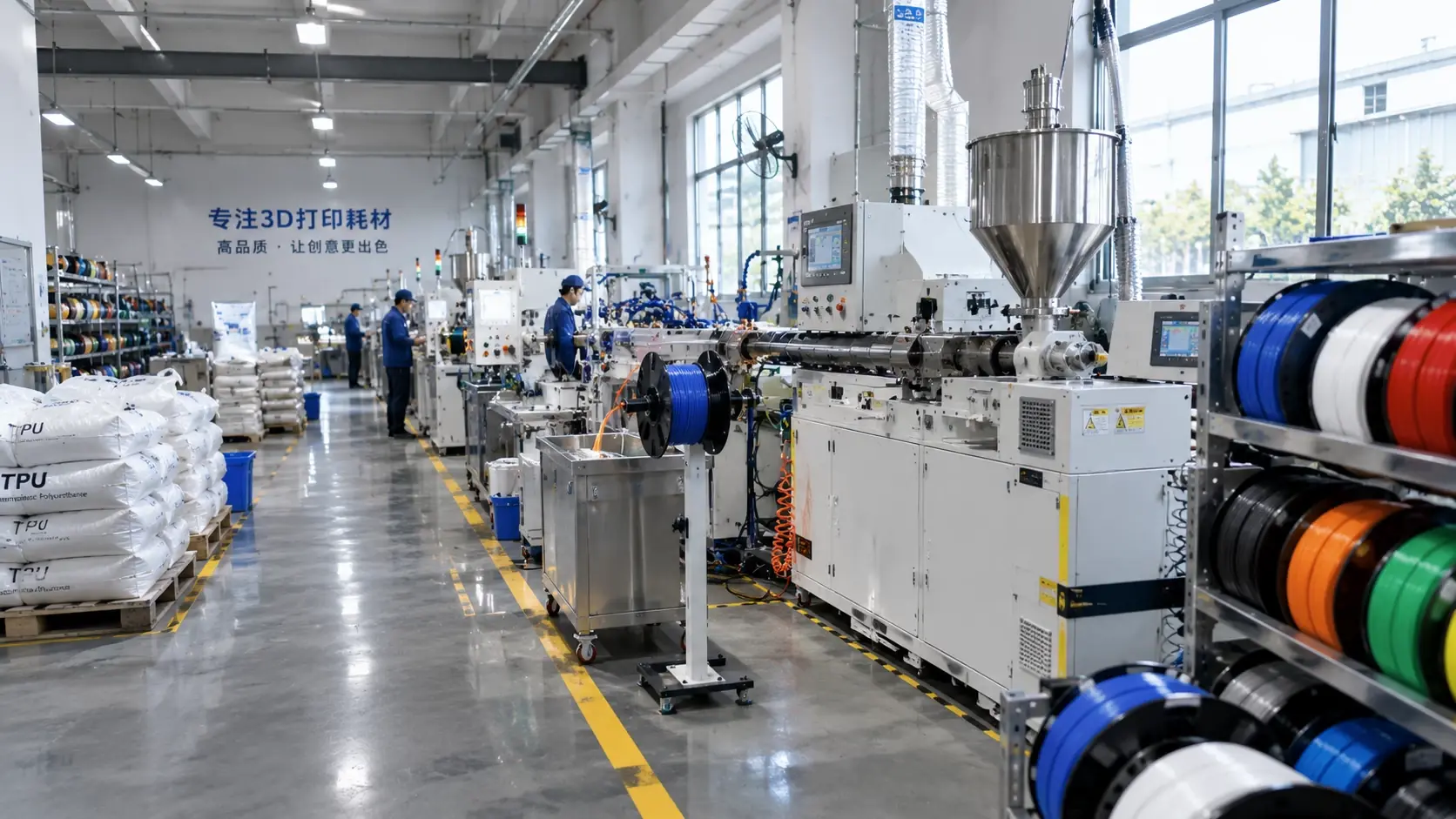
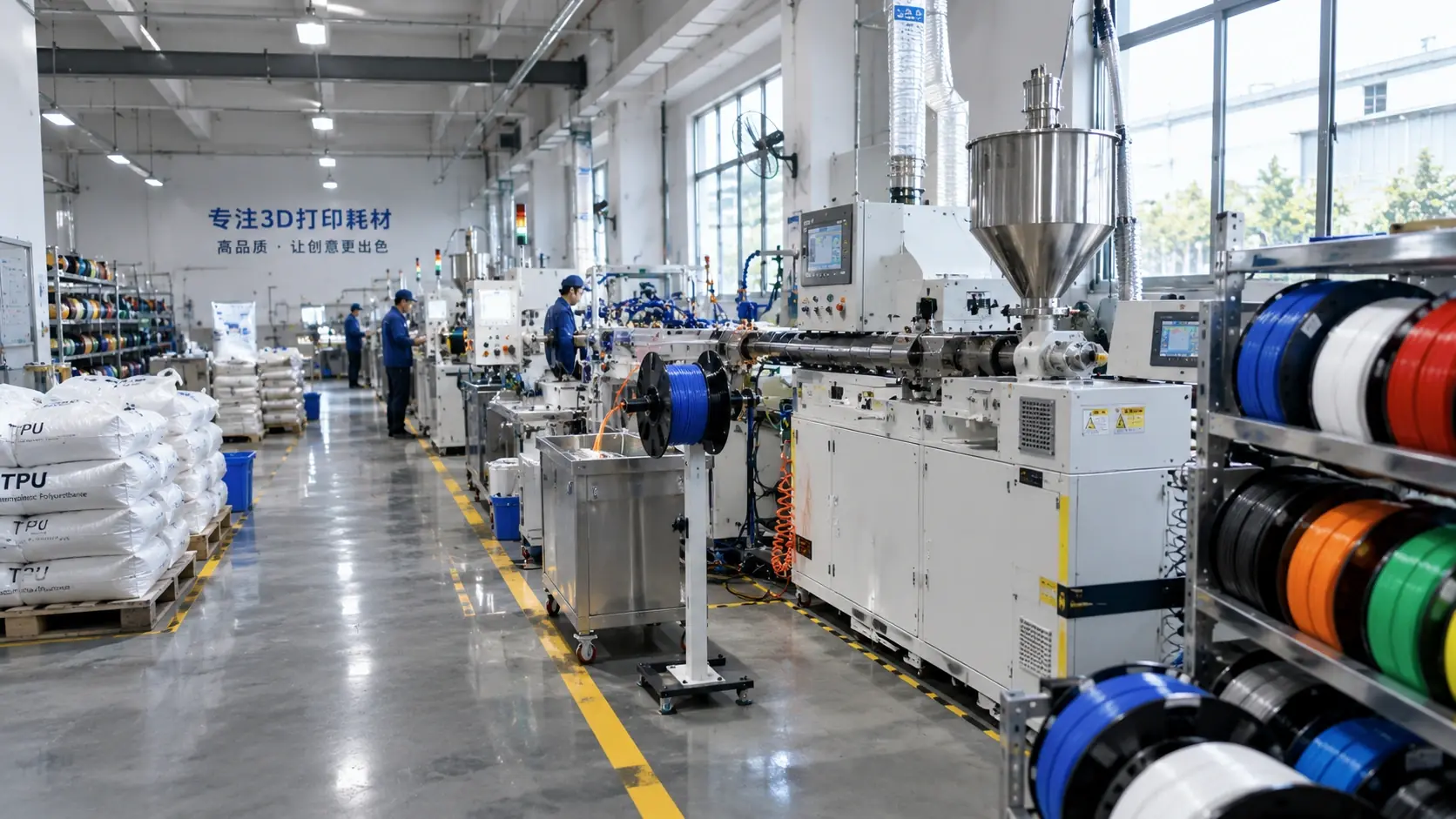
Filament storage is not only about keeping spools tidy. Moisture changes extrusion, surface quality and layer strength, especially with nylon, TPU and PETG.
This guide focuses on filament storage and the checks that matter most in practice.
Why storage matters
Most filaments absorb some moisture from the air. The rate depends on the material, local humidity, packaging and how long the spool stays open. Wet filament can bubble, string, extrude unevenly and lose layer strength.
A reliable storage routine
- Keep opened spools in sealed containers or vacuum bags.
- Add reusable desiccant and replace it when saturated.
- Label the opening date.
- Dry material according to its TDS before critical prints.
- Keep containers away from sunlight and heat.
| Material | Storage priority |
|---|---|
| PA / Nylon | Very high |
| TPU | High |
| PETG | Medium-high |
| PLA | Medium |
Common mistakes
- Leaving spools open in a humid room.
- Assuming all materials need the same drying temperature.
- Reusing saturated desiccant without regenerating it.
FAQ
Which filaments need the most protection?
Nylon and TPU are usually the most sensitive, followed by PETG. PLA is more forgiving but still benefits from dry storage.
Can I store filament in the original bag?
Yes, if it seals properly and contains working desiccant. A rigid container is often more durable.
Conclusion
A simple routine — seal, label, dry and replace desiccant — prevents most moisture-related print problems. Follow the material TDS for drying limits.
Practical notes
Record the exact profile, material batch and ambient conditions. A setting that works on one printer may not transfer directly to another. Print small test pieces before a production part, and log temperature, speed, flow and drying. Use the supplier TDS as the first reference; treat community settings as a starting point only.
Related pages - Materials - Print profiles - Request a quote