
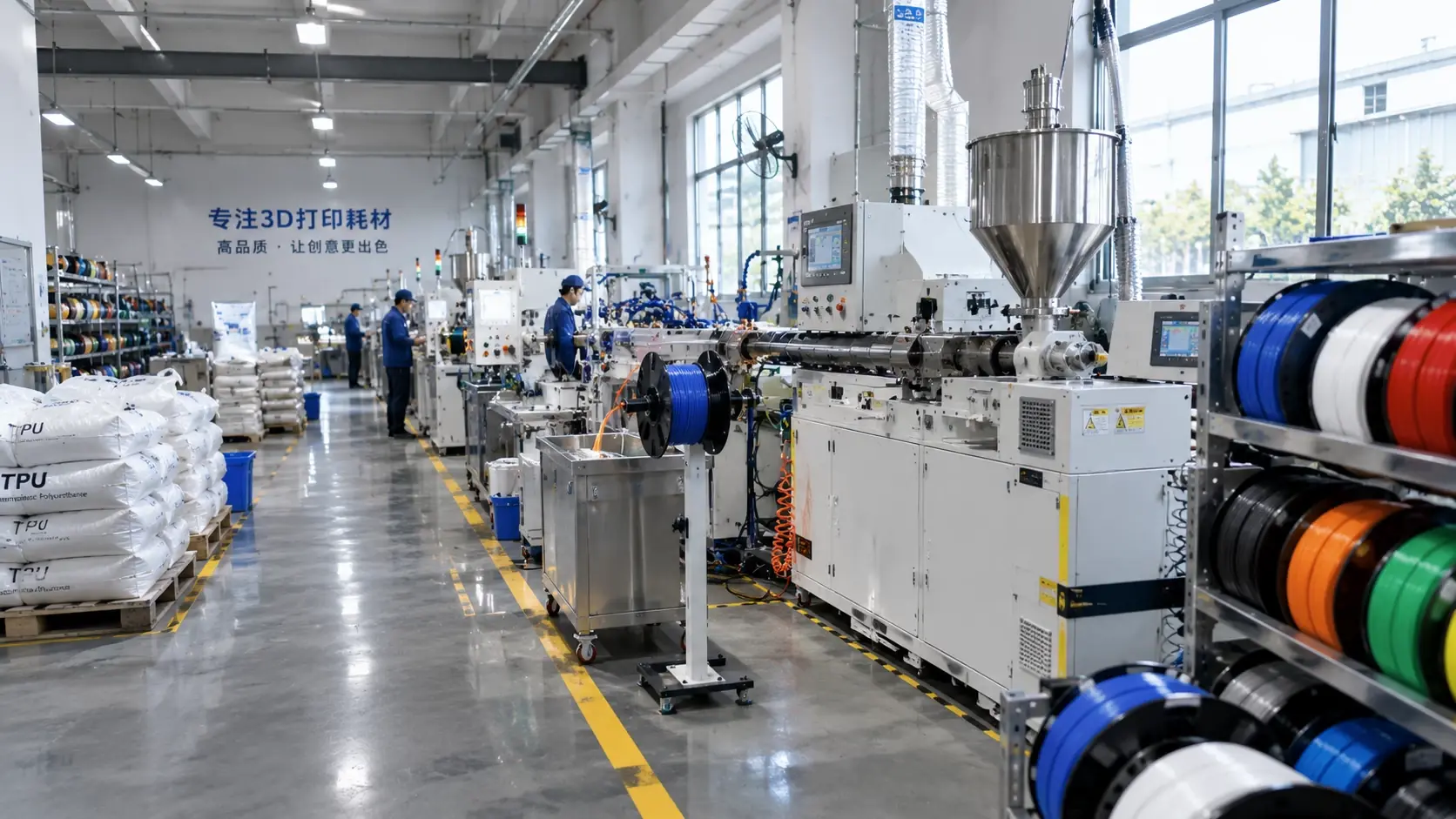
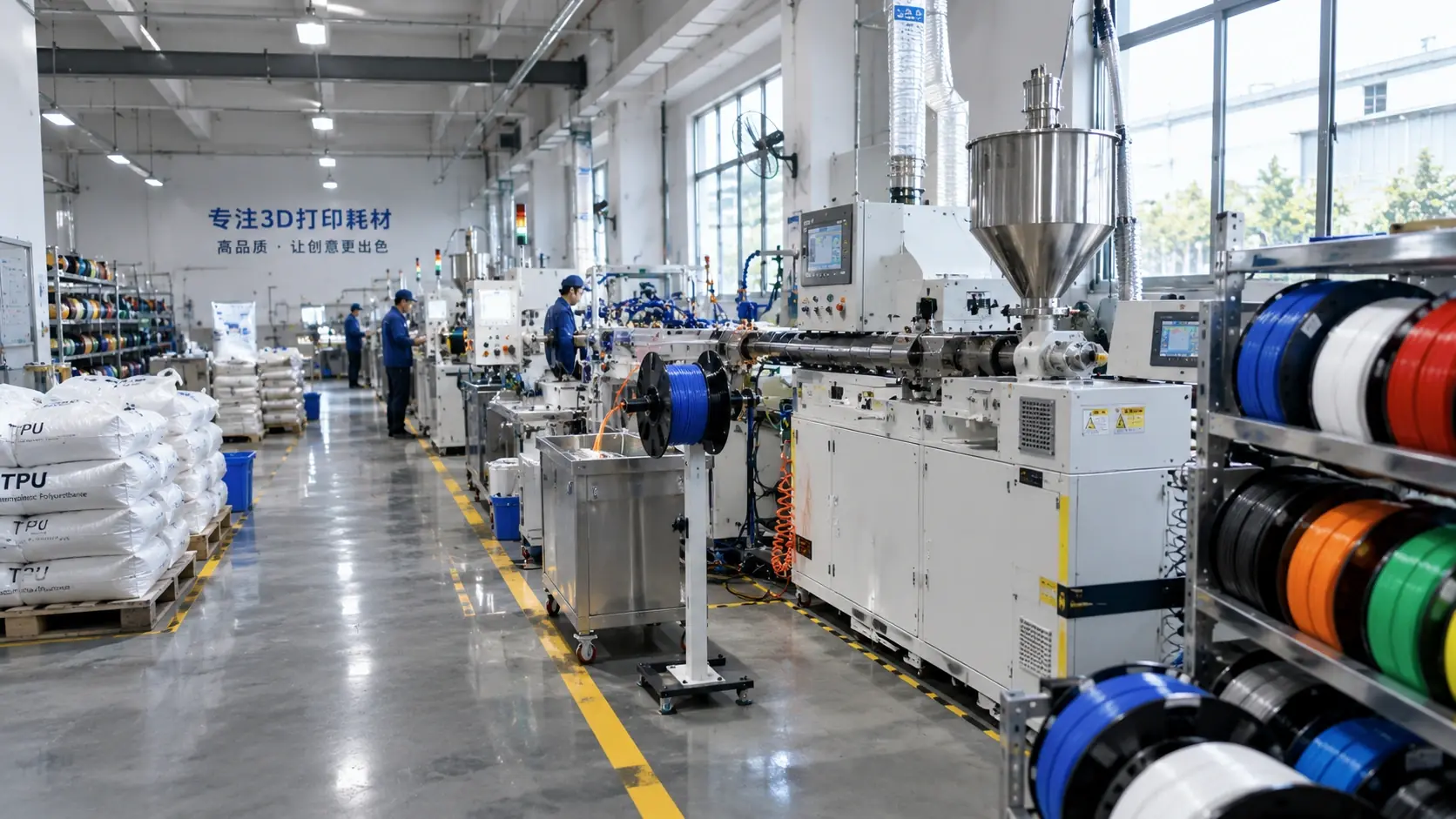
Nozzle size changes how flexible filament behaves. A larger nozzle reduces back pressure and improves flow, while a smaller nozzle can improve detail but increases the risk of buckling, clogging and under-extrusion.
Why flexible filament is different
- Low stiffness in the filament path
- Buckling before the melt zone
- Pressure-sensitive flow
- Poor recovery after retraction
Match nozzle and flow
For TPU, 0.5–0.6 mm is often easier to print than 0.4 mm. The larger orifice lowers pressure and allows a more stable extrusion rate. If detail is critical, reduce speed and layer height before reducing nozzle size.
Adjust the extruder path
- Direct drive or short Bowden
- Low retraction
- Moderate idler tension
- Smooth spool payoff
Validate the part
Test compression, rebound, layer adhesion and surface on the real geometry. A nozzle that prints a test cube well may still fail on thin walls or long unsupported paths.
| Nozzle | Effect on TPU | Benefit | Risk |
|---|---|---|---|
| 0.4 mm | Higher pressure | Detail | Buckling |
| 0.5 mm | Balanced flow | Reliability | Slight detail loss |
| 0.6 mm | Lower pressure | Speed | Coarser surface |
| 0.8 mm | Very high flow | Large parts | Poor detail |
Common engineering mistakes
- Using the smallest nozzle for detail.
- High retraction with TPU.
- Long Bowden path.
- Tight idler tension.
- Testing only a cube.
Checklist
- Is the nozzle suitable for TPU?
- Is the filament path short?
- Is retraction low?
- Is flow stable?
- Was the real part tested?
For flexible-filament hardware advice use the quote form.