
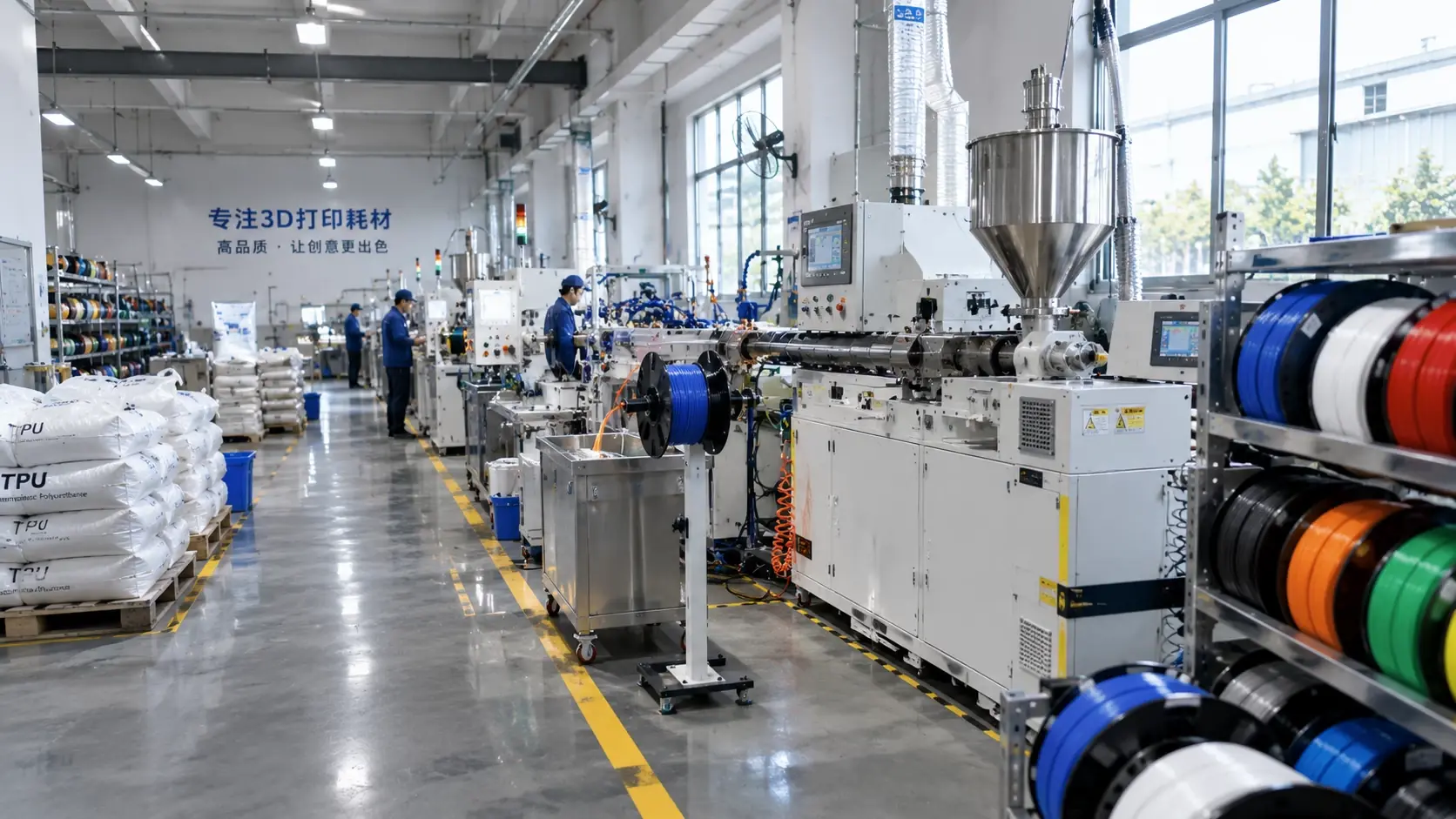
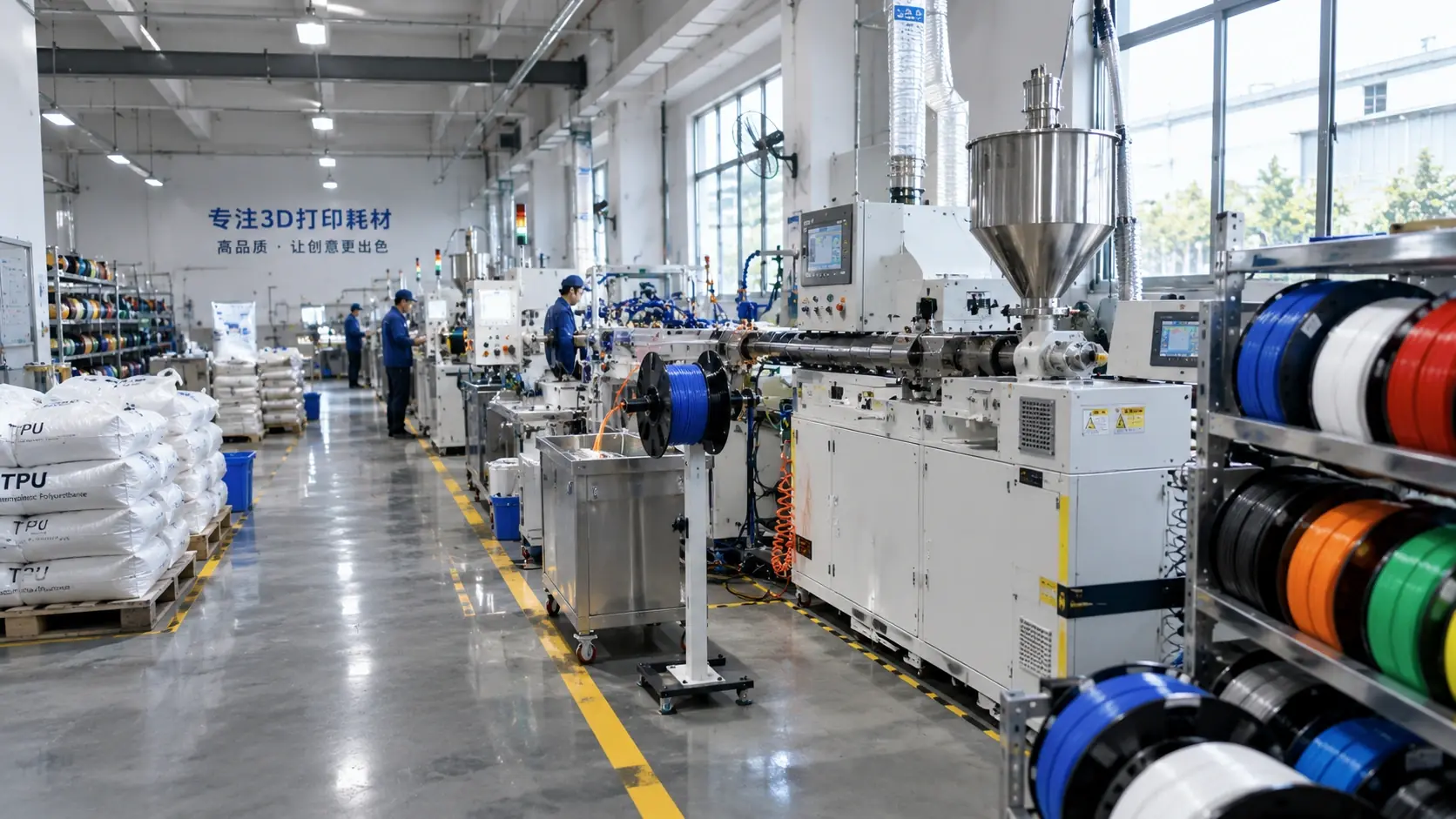
Dual-color coextrusion and gradient filament both create color variation, but they work differently. Coextrusion combines separate material streams in one strand; gradient filament changes color along the length or across a blend.
How coextrusion works
- Two or more extruders feed one die
- Colors remain separated in the strand
- Effect depends on strand orientation
- Transitions can be sharp
How gradient filament works
The color changes gradually along the spool or through a blended formulation. The printed result depends on the order of the spool, part orientation and how much material is used per layer.
Choose by the visual goal
- Sharp dual-color lines
- Smooth blended transitions
- Repeatable production
- Waste and purge
Validate with a real part
Print the production geometry and inspect several angles. A swatch or small cube does not show how the color path interacts with walls, infill and layer direction.
| Type | Color behaviour | Repeatability | Best use |
|---|---|---|---|
| Coextrusion | Separated streams | High if orientation fixed | Logos and stripes |
| Gradient | Gradual change | Depends on spool position | Artistic parts |
| Blended | Mixed color | Batch dependent | General decoration |
| Dual-color | Two distinct colors | High with purge control | Functional markers |
Common engineering mistakes
- Comparing from a small swatch.
- Ignoring spool position.
- Changing orientation between parts.
- Forgetting purge waste.
- Expecting identical colour from every batch.
Checklist
- Is the visual effect defined?
- Is orientation controlled?
- Is the spool position recorded?
- Is purge waste measured?
- Was the real part inspected?
Request coextrusion and gradient samples through the quote form.